Conservative Party sounds the alarm over a long-standing trend of building schools with outdated data.
VICTORIA, B.C.: Only eight weeks into the school year, newly opened Cedar Hill Middle School in Saanich is experiencing inadequate space relative to enrollment. This is the latest example of the NDP’s record of building schools that are stretched beyond capacity from day one. Local families promised a long-term fix are now discovering they are the latest victims in a pattern of poor planning, insufficient funding, temporary fixes, and strained capacity.
Since taking power in 2017, the government has repeatedly announced new school builds as proof of progress on its education agenda, despite consistent construction specifications that fail to meet minimum standards. Outdated student estimates that don’t reflect real population growth, followed by intentional underfunding, have now become the standard, resulting in immediate overcrowding, portable classrooms, and panicked expansion planning.
In Surrey, the fastest-growing district in British Columbia, Grandview Heights Secondary opened in 2021, only to reach maximum capacity within its first two years, and has since undergone years of subsequent expansion planning. The city’s Salish Secondary opened in 2018 and saw multiple portables added within months. Smiling Creek Elementary in Coquitlam also opened in 2018 and reached less space than was needed for enrollment during the first fall term, forcing catchment reshuffling and waitlists. In Chilliwack, the new capacity added at Rosedale Traditional Community School was exhausted within a single year, prompting renewed portable placements and boundary adjustments.
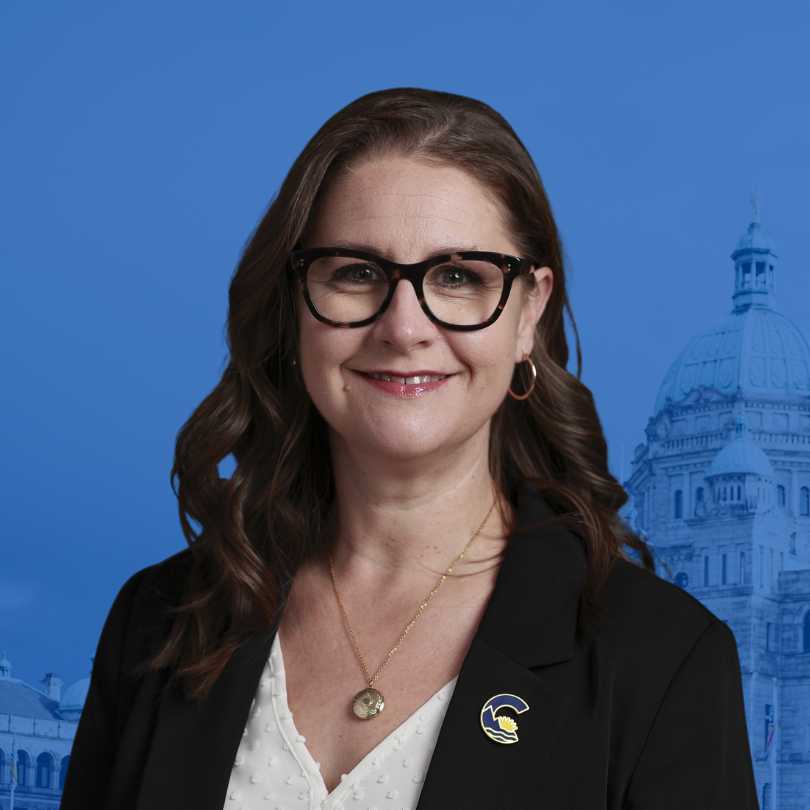
There is a system-wide disconnect between community expectations and what is being delivered, according to Misty Van Popta, Conservative Party of BC Critic for Education Infrastructure.
“While kids and their parents are told that these new builds will solve overcrowding, they soon realize they have been sold a false bill of goods based on yesterday’s numbers,” says Van Popta. “The government is striving to achieve bare minimum standards rather than addressing actual need, and the result is exacerbated student overflow in communities across the province.”
The underlying problem is structural: the province’s school capital planning model relies on conservative enrollment forecasting and shoddy build standards, often based on projections that are already outdated by the time construction begins. Meanwhile, housing development approvals and population growth continue at full speed, leaving schools perpetually behind demand. Districts are then forced into emergency measures that add costs (portables, modular additions, staggered schedules) instead of stable, well-planned educational environments.
“British Columbians rightly expect that public infrastructure will be built to serve the future,” Lynne Block, Conservative Party of BC Critic for Education. “When a school opens and is already busting at the seams, it is directly as a result of government mismanagement and negligence. BC students deserve better.”
The BC Conservative Caucus is calling for a new capital planning approach that ties school design to real housing growth forecasts rather than the lowest baseline assumptions. Communities should be able to count on the province to build schools sized for decades of population growth, not static figures from the past.
-30-
Media Contact:
Ryan Painter
Communications
Ryan.Painter@leg.bc.ca